

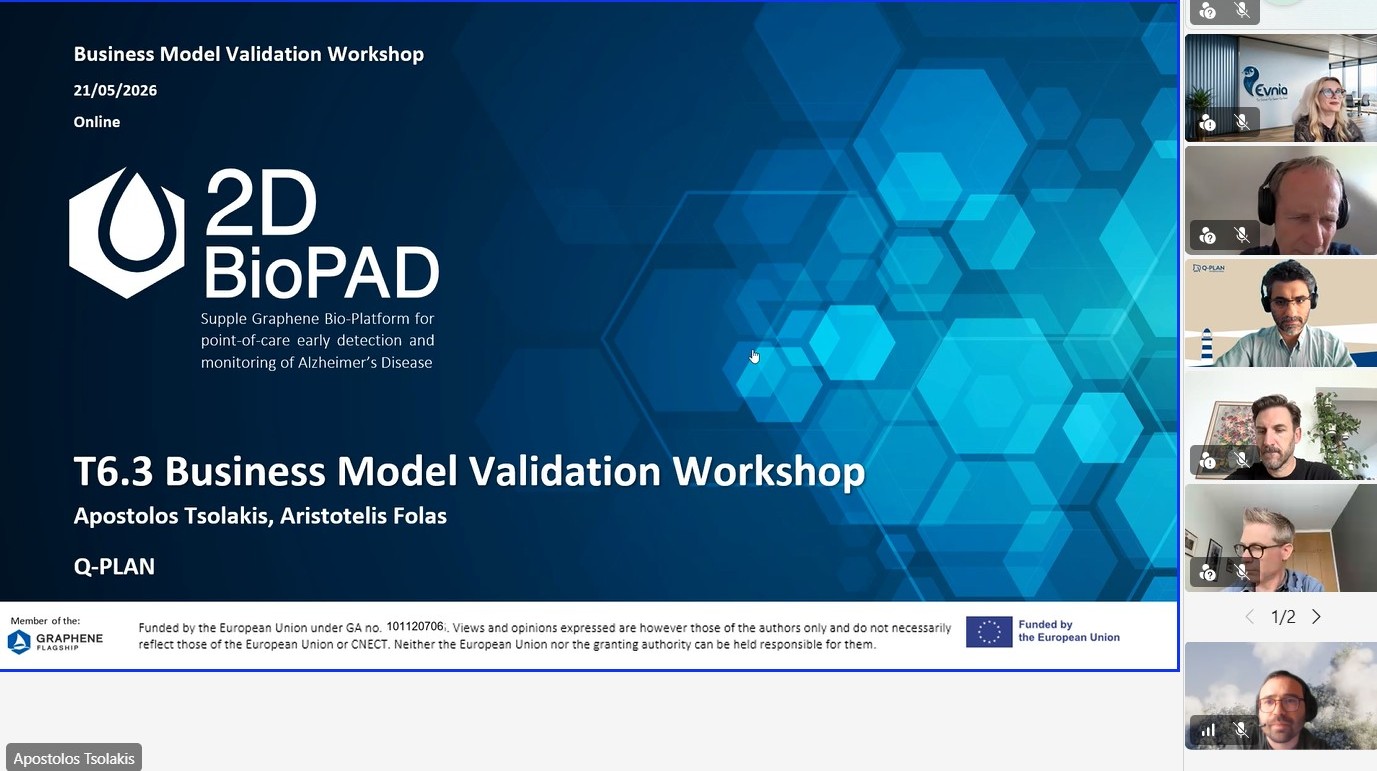
The 2D-BioPAD consortium successfully organised a dedicated workshop focused on validating and refining the project’s business models for Point-of-Care (PoC) diagnostics in Alzheimer’s Disease (AD).
The interactive session brought together partners to assess the commercial and societal potential of 2D-BioPAD technologies, while identifying opportunities for improvement and alignment with evolving healthcare needs.
The workshop reviewed key aspects of the 2D-BioPAD business models, including:
- Customer segments and target users
- Value propositions addressing unmet clinical and societal needs
- Customer relationships and delivery channels
- Key activities and resources required for market adoption
- Revenue streams and cost structures
- Strategic partnerships needed to support future commercialisation
Special attention was given to the rapidly growing markets of In-Vitro Diagnostics (IVD) and PoC diagnostics for AD. Participants discussed important market trends, including the increasing demand for blood-based testing, the expected significant growth of biomarker-based diagnostics by 2033, and the urgent need for accessible and cost-effective diagnostic solutions.
The discussions highlighted major demographic and societal challenges in Europe. By 2050, the population aged over 65 years is expected to increase by more than 43%, while the number of people living with dementia in the EU is projected to rise from approximately 9 million in 2025 to nearly 14 million. These trends reinforce the importance of personalised prevention, early detection, treatment screening, disease progression monitoring, and innovative care pathways for AD.
Participants also reviewed the current therapeutic landscape for AD, acknowledging that while recently approved drugs such as Leqembi (Lecanemab) may slow disease progression, no curative therapy currently exists. This further strengthens the need for reliable and user-friendly diagnostic technologies.
During the workshop, the consortium presented early 2D-BioPAD prototypes, including:
- The GFET desktop version developed by GRAPHEAL
- The electrochemical mobile version developed by ICN2
The session also explored the Unique Selling Points of the 2D-BioPAD tool and included interactive discussions on customer expectations, healthcare provider needs, and product kit development.
Using Mentimeter, participants actively contributed feedback through live polling and collaborative exercises addressing questions such as:
- “Which parts of the business model need improvement to better reflect the market?”
- “What improvements would you suggest?”
The workshop provided valuable insights that will support the further development of sustainable, market-oriented business strategies for 2D-BioPAD technologies and strengthen the project’s path toward real-world impact in Alzheimer’s diagnostics.


